
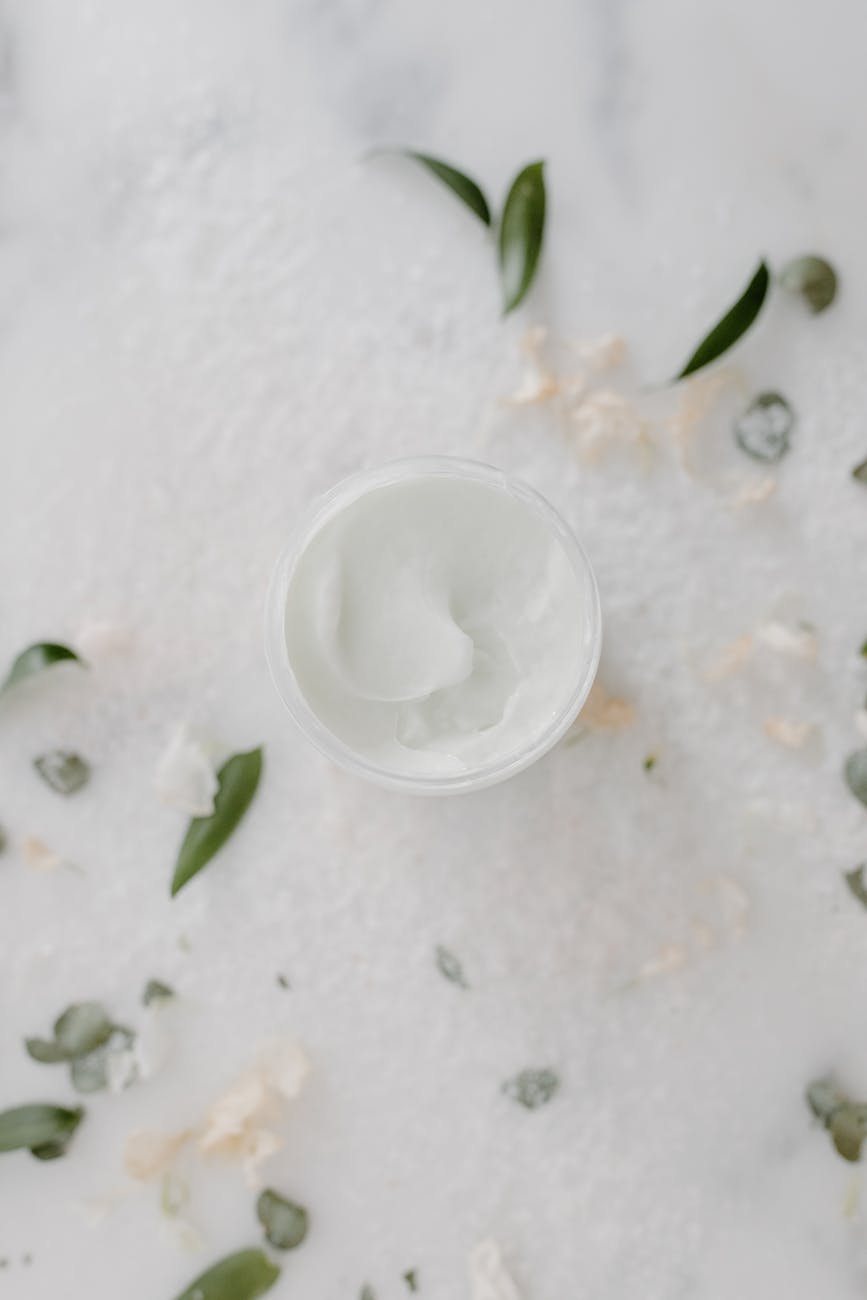
What is it?
An emulsion is a uniform mixture composed of 2 immiscible liquids (liquids that do not often mix well together) – water (the aqueous phase) and oil (the oil phase) using the binding agent called the emulsifier. The cream has a smooth consistency that is mainly made of water, which can be easily absorbed and ideal for face and body hydration on a daily basis. Good skin hydration is important to protect the skin barrier from external aggressors.
Its purpose
You mean use it as a base for any of the following:
- Moisturizer: to provide moisture for the face and body
- Make-up removing milk/make-up remover: to remove make-up from the skin effectively
- Fluid body milk: to relieve tight skin after a shower
- Hand or foot cream: to protect these areas from dryness
- Cold cream: a rich cream to give the skin a deep nourishment
- Conditioner: to help detangle hair and promote smooth hair texture
Composition
- Aqueous phase (60-85%) – water, hydrolat, hydroglycerine extract
- Oil phase (10-30%) – preservative
- Emulsifier (~3-8%) – emulsifying wax
- Preservative (~0.6%) – Cosgard
- Additional ingredient options: essential oils, hydrating agents (vegetable glycerin, aloe vera gel) or rejuvenating agents (vitamin E), fragrance, natural coloring, natural exfoliant
Modify the texture
- 3-5% emulsifying wax -> liquid cream
- 5-8% emulsifying wax -> thick cream
Basic procedure
- Weigh and put the ingredients of the water phase and oil phase into 2 separate bowls. Add the emulsifying wax to the oil phase bowl.
- Heat these 2 bowls in the water bath or bain-marie until the emulsifying wax has completely melted or the bowls reach to the temperature of 70 C/158 F.
- Remove them from the heat and choose either:
- Pour the water phase into the oil phase (water-in-oil (W/O) emulsion, which creates thicker, richer cream)
- Pour the oil phase into the water phase (oil-in-water (O/W) emulsion, which creates lighter cream)
- Mix vigorously with a small stainless steel whisk until the cream becomes white and homogeneous.
- To speed up the cooling process, put the bowl in the bath of cold water and keep mixing until the cream becomes thicken and smooth.
- Add and stir the remaining ingredients such as preservative and other additional ingredients to the cream one at a time to make sure the mixture is blended well.
- Transfer the finished product to a container of your choice.
Final Thoughts
Making an emulsion may sound technical at first, but once you understand the roles of water, oil, and an emulsifier, it becomes a flexible and rewarding foundation for countless DIY creations. With just a few adjustments to your ingredients or emulsifying wax percentage, you can transform one basic formula into anything from a lightweight daily moisturizer to a rich, nourishing cream for skin or hair. More importantly, emulsions give you full control over what goes onto your body—allowing you to tailor texture, function, and ingredients to your personal needs.
✨ Now it’s your turn: What do you plan to make with your first emulsion—face cream, body milk, conditioner, or something unique? Have a favorite ingredient or tip you love adding to your emulsions? Share your ideas and experiences in the comments to inspire fellow makers!





 Wholesomenique
Leave a comment