
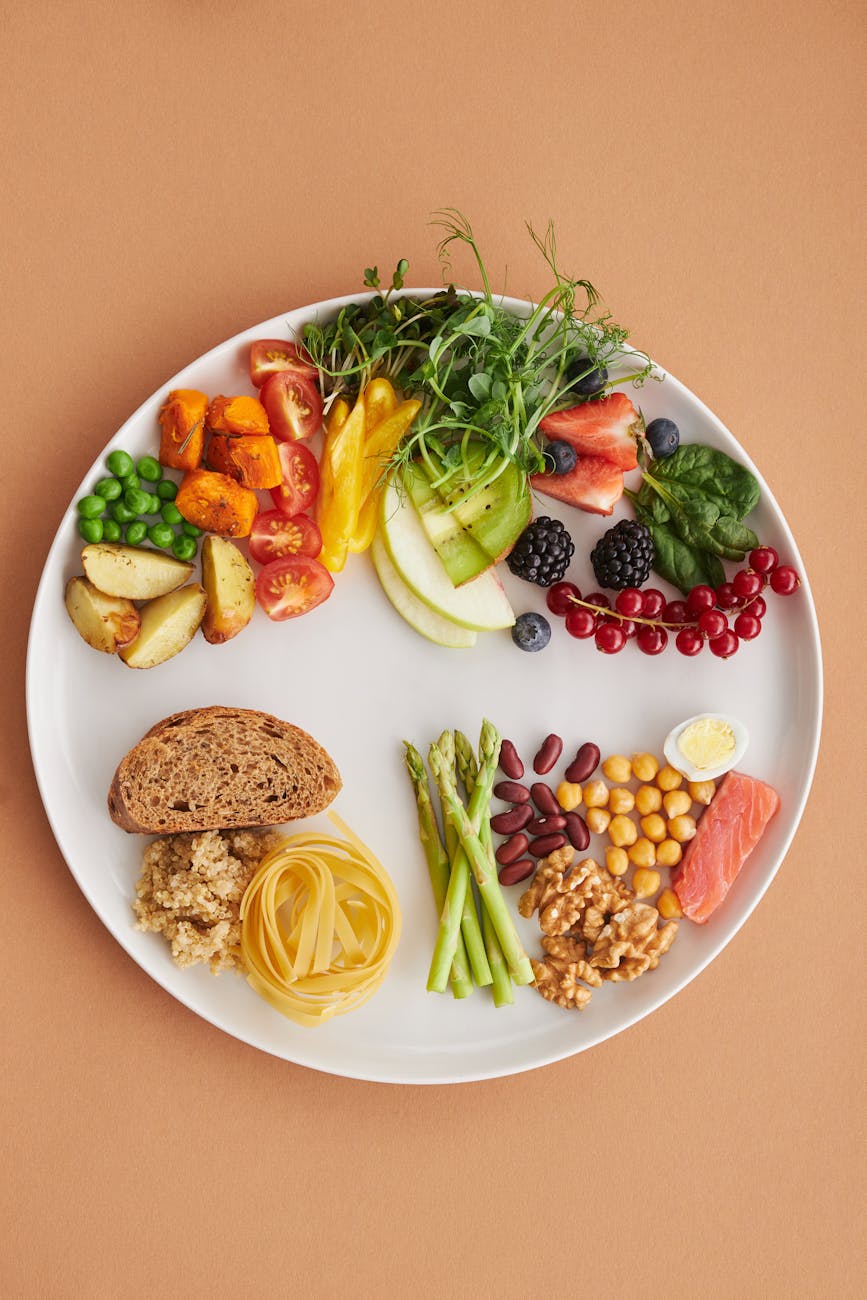
When it comes to the best way to eat well, it can be overwhelming with lots of information that are presented to us. Despite this, the fundamentals of healthy eating can be simple but effective way to follow – variety and balance on the plate or bowl of choice.
There is no one ideal way to have a healthy, balanced diet; it has to align with your body’s energy needs and your lifestyle, beliefs, and preferences. The “balanced plate/bowl” concept is a practical guide on the types and portions of foods you should try to eat during mealtimes as well as when you are shopping, cooking, or eating out, which enable you to eat a range of nutritious foods daily.
It isn’t necessary to eat the optimal amount of food groups outlined below at every meal; try to aim for it throughout the day or week. A healthy adult’s diet should include carbohydrates, protein, and fat in 5 key food groups. Hydration is essential to absorb the nutrients and feel satiated.
What’s on a Balanced Plate/Bowl?
- Vegetables and fruits: Aim to consume at least 5 portions or more daily; try to eat in various forms like fresh, frozen, dried, and canned (in water or juice without salt or sugar). Do a higher ratio of vegetables to fruits and often alter your combinations.
- 1 portion
- = 1 handful/3 oz/3-4 tsp cooked spinach/green beans
- 1 medium tomato
- 1 medium apple/orange/banana
- 5 oz of fruit juice (max per day)
- 1 portion
- Starchy carbohydrates: This includes rice, pasta, potatoes, quinoa, oats, and other grains. It considers as the base of the meal and be 1/3 of the daily intake (3-4 portions). Go for higher-fiber whole grain options as possible, with reduced or no salt or sugar.
- 1 portion
- 2 handfuls dried rice/pasta/couscous
- 1 fist-size baked potato
- 2 slices bread
- 1 portion
- Protein-rich: This includes beans and legumes (i.e., different kinds of beans, lentils, and chickpeas), quinoa, soybean products (i.e., tofu and tempeh), nuts, eggs, fish, and meat. It’s best of interest to reduce the intake of red, processed meat. (2-3 portions)
- 1 portion
- half a handful salmon/chicken/steak
- 4 oz cooked beans/lentils
- 1 oz/palm-size nuts or seeds
- 3 oz tofu
- 1 portion
- Dairy: This includes various kinds of cheeses, yogurt, and milk; it is a good source of many nutrients such as calcium and phosphorus. (2-3 portions)
- 1 portion
- 1 oz/2 thumbs cheese
- 7 oz low-fat cow’s milk or unsweetened daily alternative (4 oz on cereal)
- 4 oz low-fat yogurt
- 1 portion
- Unsaturated oils and fats: Olive, canola, coconut, or avocado oils should be used in small amounts of cooking or to enhance flavor.
- Try to have 6-8 glasses of fluids a day – preferably water or sugar-free drinks like tea and coffee
Vegetarians & Vegans
The same fundamentals still apply, but there’s a strong emphasis on consuming more variety of protein sources since most plant-based protein lacks certain essential amino acids.
Go for daily alternatives such as unsweetened soy milk that is fortified with calcium in addition to other sources of healthy omega-3 fatty acids like nuts and seeds. Vegans may still need to supplement some nutrients such as vitamins D and B12, and iron.
Final Thoughts
Healthy eating doesn’t have to be complicated, restrictive, or perfect. At its core, it’s about building meals that feel nourishing, satisfying, and realistic for your everyday life. The balanced plate or bowl approach offers a flexible framework—one that encourages variety, balance, and enjoyment rather than rigid rules or short-term fixes.
Remember, balance isn’t achieved in a single meal. It’s something you gently work toward over the course of a day or week. Some meals may lean heavier on vegetables, others on protein or carbohydrates—and that’s completely okay. Listening to your body, honoring your preferences, and adapting to your lifestyle are just as important as hitting specific portions.
Whether you eat omnivorously, vegetarian, or vegan, focusing on whole foods, diverse nutrients, and adequate hydration can help support energy, digestion, and overall well-being. Use the balanced plate or bowl as a guide—not a rulebook—and allow it to evolve with your needs.
So next time you’re planning a meal, grocery shopping, or eating out, ask yourself: Does this feel balanced, nourishing, and enjoyable? Small, consistent choices add up—and that’s where sustainable healthy eating truly begins. 🌿
Source
Lambert, Rhiannon. The Science of Nutrition. DK, 2021.




 Wholesomenique
Leave a comment